Ndi Umunyamulenge logoNdi Umunyamulenge

Identity

A name held with dignity — Ndi Umunyamulenge

Not because they lacked a homeland — but because hostile actors refused to accept that they belonged.

The crisis of belonging

As told in History, the Banyamulenge are Congolese of South Kivu. This chapter takes up what that identity has cost — beginning with the crisis of belonging.

← Read the History chapter
Introduction

Introduction

When Belonging Becomes Dangerous

To be Banyamulenge is to carry a Congolese highland name — language, cattle culture, kinship, and a home in South Kivu. For generations that name has also been treated as a problem: marked as “different,” doubted as foreign, and used by political actors to strip people of safety.

This chapter starts there — with the crisis of belonging. Only then does it turn to Gatumba, where that crisis reached its most terrible cost, and to the unfinished work of justice that still follows the survivors.

Identity as a weapon

Identity as a weapon

The Crisis of Belonging

Language, cultural practice, and appearance marked the Banyamulenge as “different” in the eyes of some neighbouring communities. The colonial era, particularly under Belgian rule, institutionalized rigid ethnic classifications that sowed lasting resentment. That legacy hardened into a post-independence crisis of belonging — not because the people lacked a homeland, but because hostile actors refused to accept it.

The 1964 Luluabourg Constitution of newly independent Congo introduced a citizenship clause that declared as Congolese only those whose ancestors belonged to tribes established in the territory before 18 October 1908 — the date of the Belgian Congo's creation. While meant to define national identity, it cast lasting doubt on groups like the Banyamulenge, whose deep highland presence was often reframed by hostile actors as “recent migration.”

By the 1990s, successive regimes repeatedly labelled the Banyamulenge “foreigners” and “enemies of the state.” That rhetoric was a precursor to violence. When conflict erupted in South Kivu, many fled. Some sought refuge in neighbouring Burundi, hoping for safety. Instead they found themselves in a new theatre of the same war — where their identity made them targets once again.

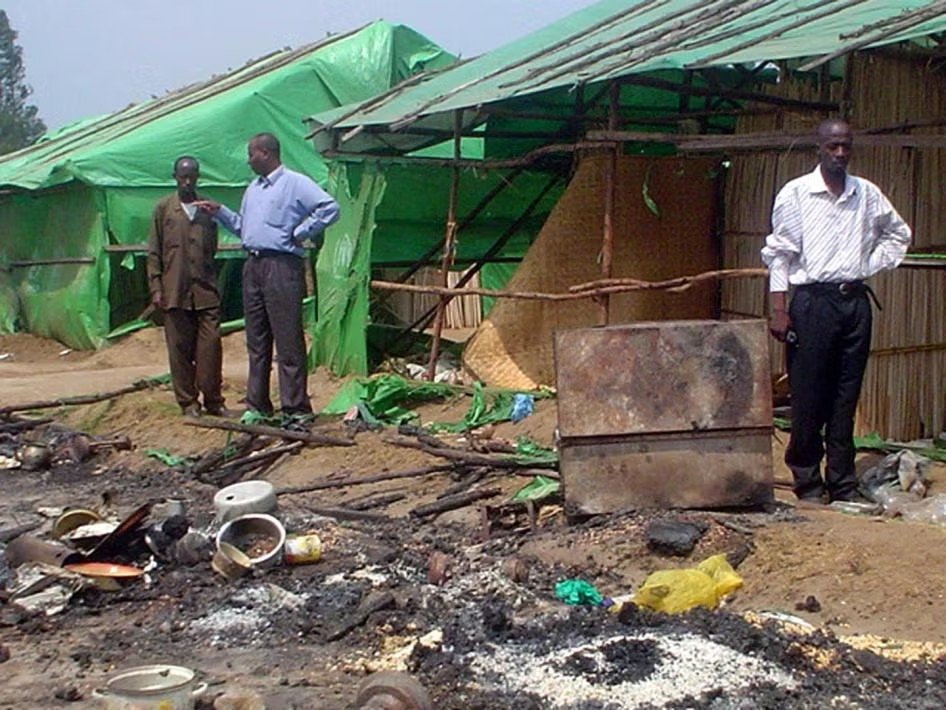
Burned shelters and debris at the Gatumba refugee camp after the massacre

Aftermath at the Gatumba refugee camp — burned shelters and scattered belongings after the attack of 13 August 2004.

Via Human Rights Watch.

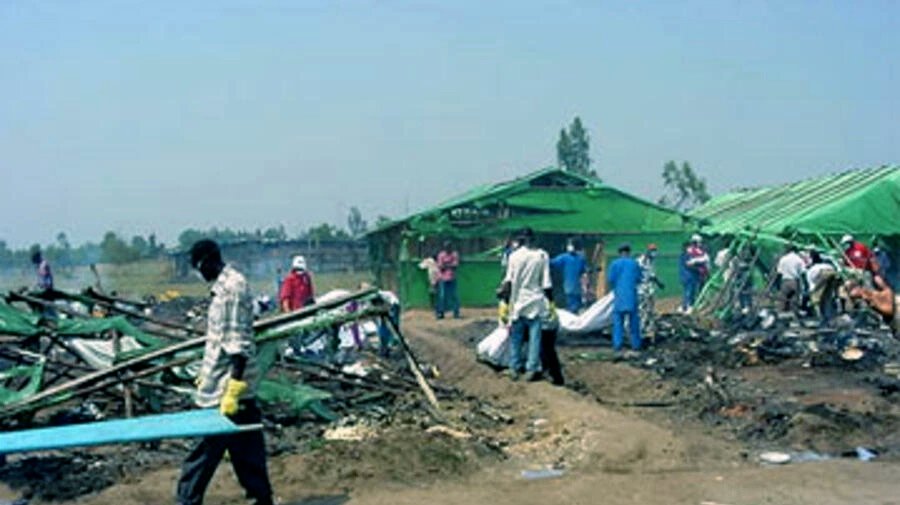
Destroyed green-tarped shelters and recovery workers at Gatumba after the massacre

Remnants of the Gatumba camp after the massacre — burned shelters and recovery work among the ruins.

UNHCR photo archive.

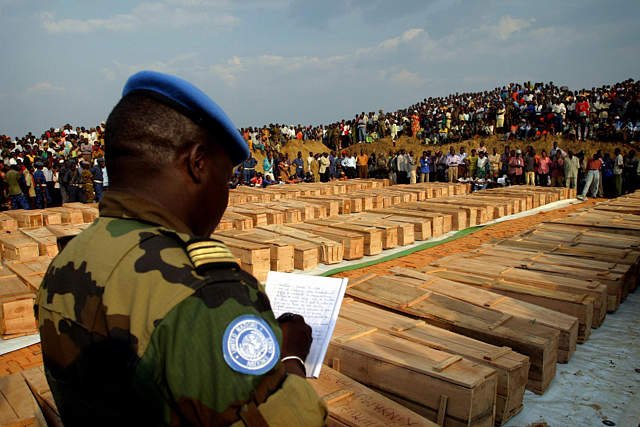
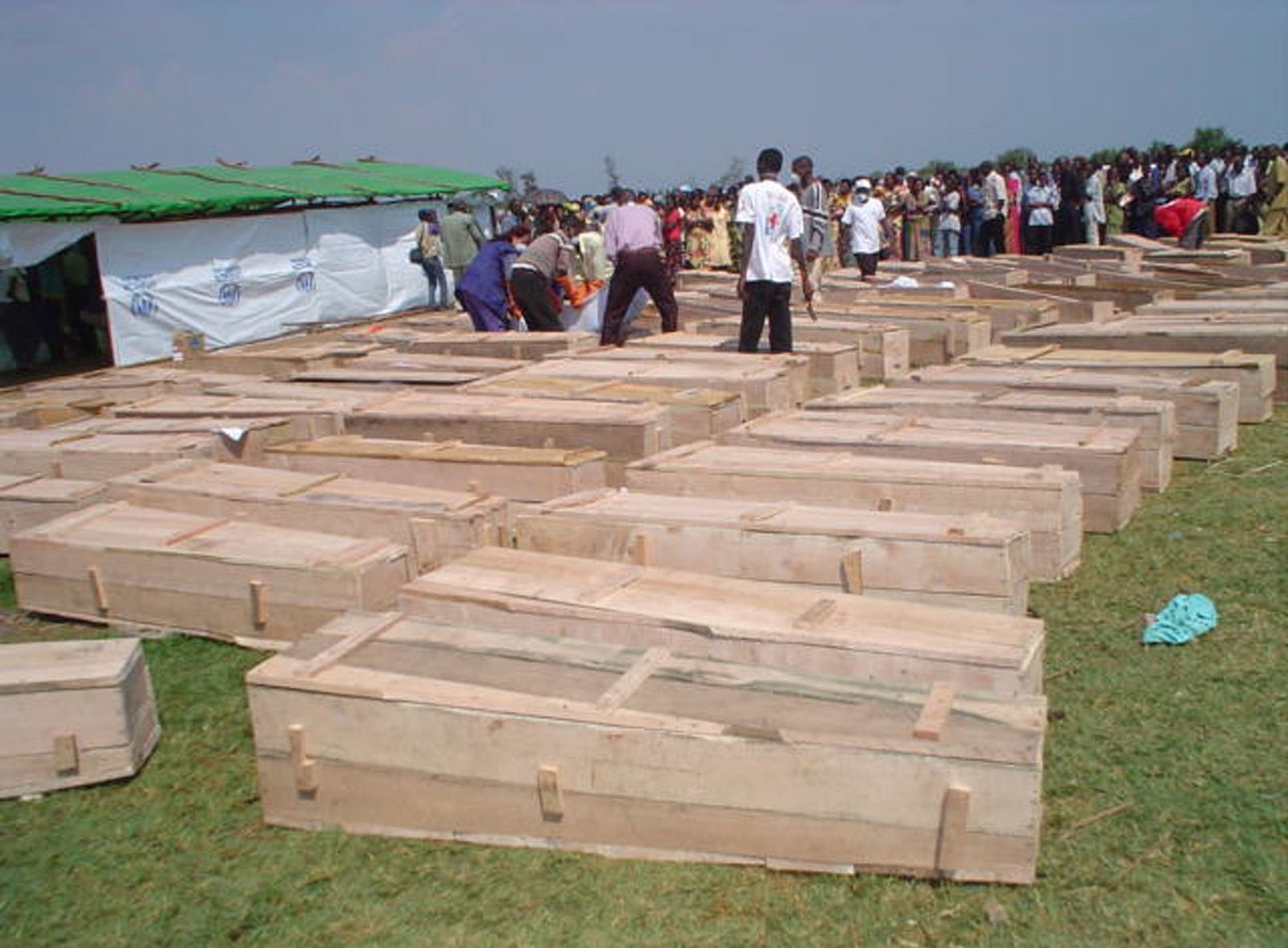
A UN peacekeeper documents rows of coffins at the Gatumba funeral

A United Nations peacekeeper documents rows of coffins as mourners gather on the hillside after the Gatumba Massacre.

Via Human Rights Watch.

13 August 2004

The Gatumba Massacre

By August 2004, a UNHCR camp at Gatumba, in western Burundi, sheltered roughly 1,200 Congolese refugees — most of them Banyamulenge who had fled violence in South Kivu. They came looking for a night of rest under international protection. They were mothers, children, elders, and families who had already lost homes.

Around midnight on 13 August 2004, fighters of the Forces nationales de libération (FNL) — then led by Agathon Rwasa — stormed the camp with guns, machetes, and grenades. Survivor testimony and Human Rights Watch investigations describe a methodical assault: tents torn open, families hunted down, Banyamulenge singled out with ethnic slurs. United Nations peacekeepers on site could not stop it. Some people escaped into the bush; many did not.

By morning, roughly 152–166 civilians were dead and about 106 wounded. Entire households were gone. Children woke as orphans. The world expressed outrage; arrest warrants followed for FNL leaders, including Rwasa and spokesperson Pasteur Habimana. A full reckoning never came. Political convenience outran justice — and the survivors were left to carry both grief and memory alone.

Archive · August 2004

Witness photographs

Two photographs from the days after Gatumba — the mass funeral and the work of mourning, kept as witness.

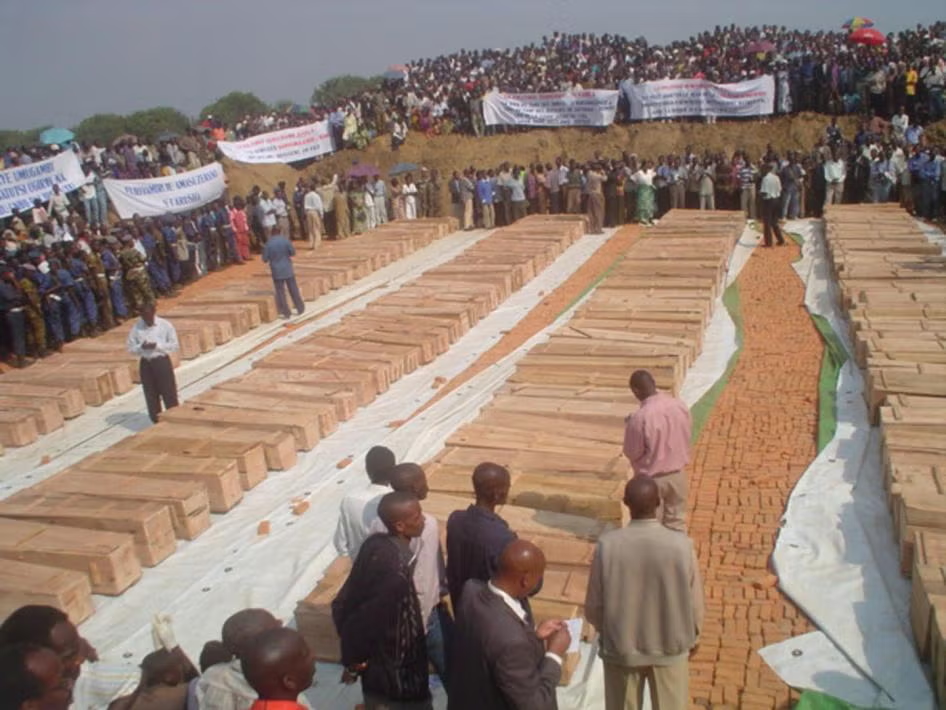
Rows of coffins at the mass funeral for Gatumba Massacre victims, August 2004

Mourners gather on 16 August 2004 around the coffins of more than 150 Congolese Banyamulenge killed at the UN-run Gatumba refugee camp in Burundi.

© 2004 Aloys Niyoyita / AP Photo. Via Human Rights Watch.

Source: Human Rights Watch

Coffins laid out near a UNHCR tent as survivors identify victims at Gatumba

Coffins laid out near a UNHCR shelter as Tutsi Congolese survivors begin identifying the dead, 15 August 2004.

© 2004 Aloys Niyoyita / Associated Press. Via Deseret News.

Source: Deseret News

The legacy of impunity

The legacy of impunity

Years Without Justice

Fifteen years on, Human Rights Watch found victims and families still waiting. The silence said something brutal: that these lives could be set aside for political ease. Survivors live with trauma; orphans grow up without parents; communities that should have been protected learned they were expendable.

In 2024, survivors and relatives filed new criminal cases — a spark of hope after two decades. Progress remains slow. The perpetrators are still free. Naming Gatumba honestly means naming that unfinished demand for judgment.

Identity today

Burden and Resilience

Gatumba is not an isolated night. It is what happens when identity is treated as a weapon. That same identity is also a source of strength: pastoral life, language, custom, and the right to safety in one's own country.

Many Banyamulenge still face discrimination, land dispossession, and violence. The rhetoric of “foreignness” persists. Some were drawn into the region's wars as fighters; many more were only victims. That complexity is often used to smear the whole community. It does not erase the right to live without fear.

A call to action

Justice, Recognition, and Healing

This story is not only loss. It is survival, dignity, and the work still owed to those who remain.

Demand accountability. Burundi, the DRC, and the wider international community must prioritise prosecution. Justice delayed is justice denied.

Support the survivors. The Gatumba Refugees Survivors Foundation (GRSF) offers psychosocial support, legal aid, and advocacy — vital work that remains underfunded.

Uphold citizenship rights. Full recognition as Congolese nationals must never be bargained away. Identity must never be a pretext for violence.

Teach accurate history. Shared narratives — without distortion or demonisation — are part of healing. Sites such as Ndi Umunyamulenge exist so that memory is not erased.

Conclusion

The Unfinished Work of Memory

The crisis of belonging made Gatumba possible. Remembering the dead means facing that truth — and refusing the impunity that followed.

The Banyamulenge deserve more than mourning. They deserve justice, recognition, and a future where their identity is a source of pride — not peril. The world cannot afford to look away again.

Stand with the survivors

Reach out. Help secure justice.

The Gatumba Refugees Survivors Foundation advocates for accountability, compensation, and healing. Visit their site to learn how you can support survivors and keep the demand for justice alive.

Visit gatumbasurvivors.org